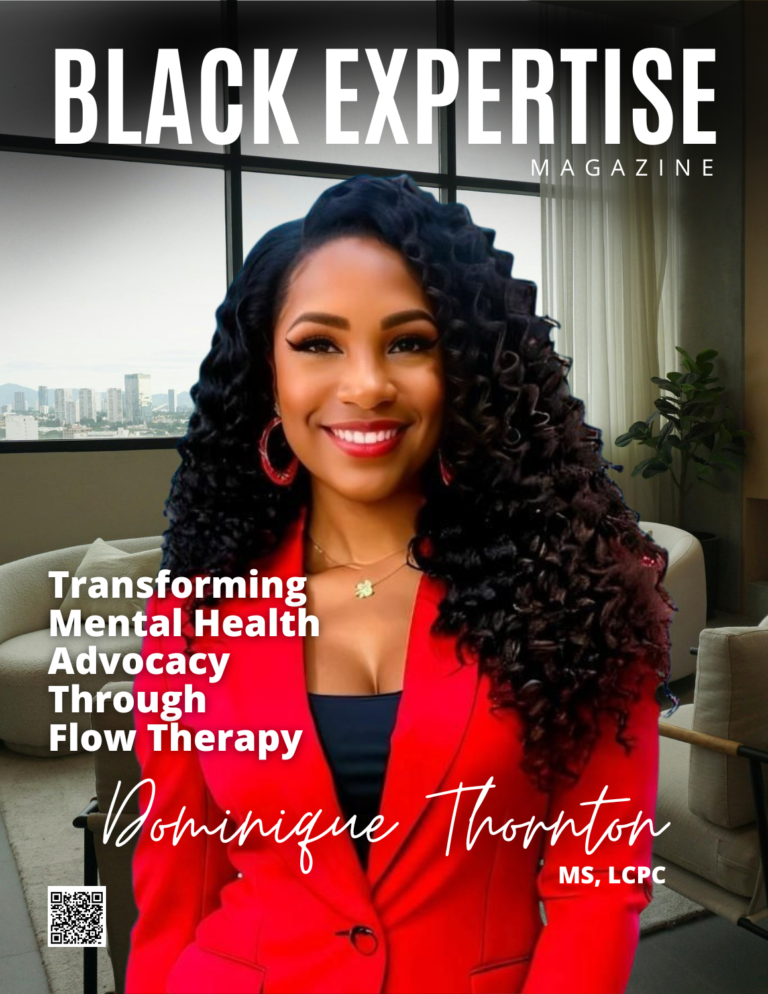
Across the United States, conversations around mental health are growing louder, more honest, and more urgent. Yet for many Black communities, access to culturally affirming care remains limited. Leaders like Dominique Thornton, MS, LCPC are working to close that gap — transforming how healing, therapy, and wellness are approached.
As the founder and lead clinician of Flow Therapy, Thornton is building a practice rooted in empathy, accessibility, and cultural awareness. Her mission is simple but powerful: help individuals reconnect with their inner balance and move through life with clarity, resilience, and emotional strength.
Through her clinical work, advocacy, and public leadership, Thornton represents a new generation of mental health professionals reshaping wellness for communities that have historically been overlooked.
The Vision Behind Flow Therapy
Flow Therapy was created to support individuals navigating life’s most challenging moments — trauma, anxiety, depression, relationship struggles, identity exploration, and major life transitions.
At the heart of Thornton’s approach is the idea of “flow.”
Flow represents a state where mental, emotional, and physical well-being align — allowing people to move through life with confidence rather than survival mode.
Through virtual counseling and wellness services, Flow Therapy provides support for:
- Anxiety and depression
- Trauma recovery
- Self-esteem and identity development
- Life transitions and career stress
- Family and relationship dynamics
- Emotional regulation and resilience
Thornton’s work prioritizes culturally responsive therapy, particularly for racial and ethnic minorities, young adults, and families seeking care that acknowledges their lived experiences.
For many clients, Flow Therapy is more than a clinical service — it is a space for affirmation, reflection, and empowerment.
Academic Excellence Meets Real-World Advocacy
Dominique Thornton’s foundation in mental health care is rooted in strong academic training.
She earned her Master of Science in Clinical Mental Health Counseling from Johns Hopkins University, one of the nation’s most respected institutions in the behavioral sciences.
Her undergraduate degree in Sociology from Delaware State University, a historically Black university, further shaped her understanding of social systems, inequality, and community empowerment.
This combination of academic insight and cultural perspective informs her therapeutic philosophy — one that recognizes how systemic factors, identity, and lived experiences influence mental health outcomes.
Advocacy Beyond the Therapy Room
Thornton’s influence extends well beyond clinical practice.
In 2019, she held the title of Miss Maryland United States, using the platform to elevate conversations around mental health, racial equity, and community healing.
Her advocacy work has included:
- Organizing protests against racial injustice
- Speaking at national conferences on mental health policy
- Advising local leaders and organizations on wellness initiatives
- Promoting accessible mental health resources for underserved communities
One of her most impactful initiatives was advocating for the creation of Maryland’s first official Mental Self-Care Day, later proclaimed by Governor Wes Moore.
The statewide recognition encourages residents to prioritize mental wellness through intentional self-care practices and open conversations about emotional health.
The initiative represents an important cultural shift — moving mental health from crisis management to preventative care and everyday wellness.
Recognition and Leadership
Thornton’s dedication to community impact has earned significant recognition.
She was named a Leading Women Honoree by The Daily Record, celebrating her influence in advancing leadership, advocacy, and public service.
But Thornton’s true measure of success lies in the stories of individuals who rediscover confidence, healing, and purpose through therapy.
In her view, mental health care is not just about addressing problems — it’s about helping people reconnect with themselves and their potential.
The Future of Mental Wellness
As mental health conversations evolve, leaders like Dominique Thornton are shaping what the future of care will look like.
That future includes:
- culturally competent therapy
- accessible virtual services
- community education
- preventative wellness practices
- policy advocacy
Through Flow Therapy and her expanding public platform, Thornton continues to create spaces where healing is normalized, stigma is dismantled, and communities are empowered to thrive.
In a world that often demands constant movement, Dominique Thornton reminds us of something essential:
True wellness begins when we learn to move through life in flow.